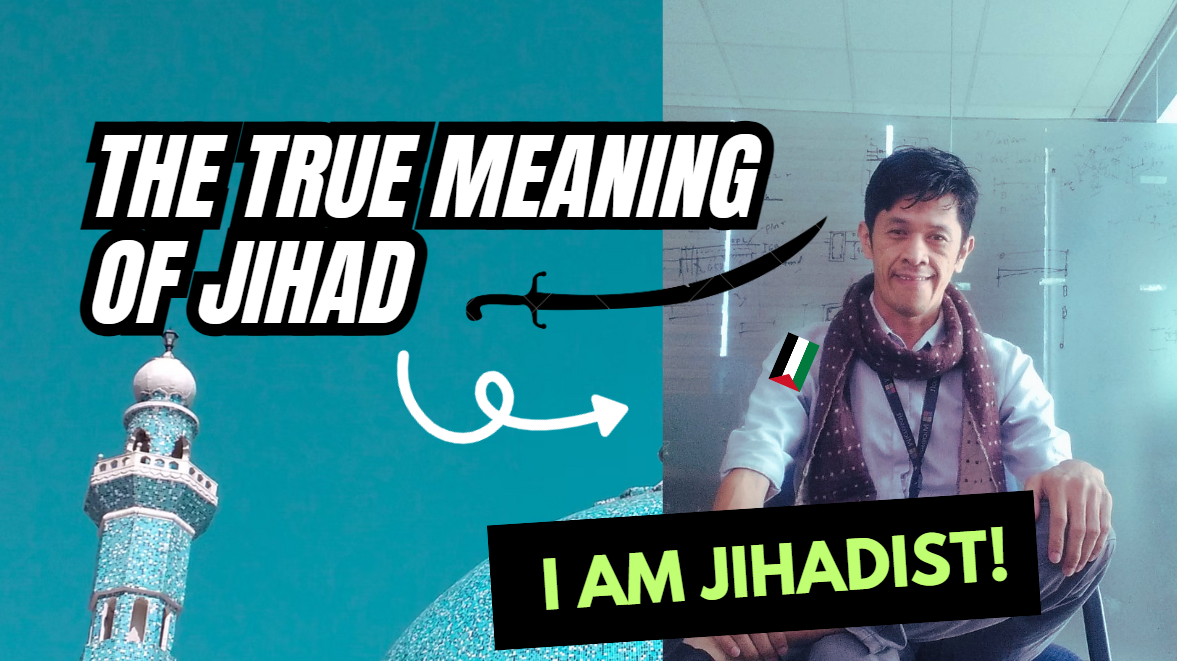
The true meaning of Jihad is a term that has been both widely misunderstood and misrepresented in today’s world. Contrary to popular belief, Jihad does not mean “holy war.” Instead, it refers to a personal and communal struggle in the way of righteousness. In Islam, Jihad encompasses various aspects of life, from spiritual self-improvement to standing against oppression and injustice. The Understanding of the True Meaning of Jihad This aims to clarify the true meaning of Jihad, its types, and its role in Islamic teachings, using references from the Qur’an and Islamic tradition. 5 Characters of Jihadists The concept of Jihad in Islam can be categorized into several distinct forms: Struggle of the Self (Jihad al-Nafs) This is the internal struggle every believer faces against their own desires, temptations, and weaknesses. It is the most important form of Jihad and represents the effort to be a better Muslim, improve one’s character, and follow the path of righteousness. Qur’an Says: وَالَّذِينَ جَاهَدُوا فِينَا لَنَهْدِيَنَّهُمْ سُبُلَنَا ۚ وَإِنَّ اللَّهَ لَمَعَ الْمُحْسِنِينَ (Translation: “And those who strive for Us—We will surely guide them to Our ways. And indeed, Allah is with the doers of good.” —Surah Al-Ankabut, 29:69) This verse emphasizes that those who engage in Jihad (struggle) in the path of Allah will be rewarded with guidance. It highlights that Jihad is not limited to physical conflict but includes striving for moral excellence and spiritual growth. Struggle of the Tongue (Jihad al-Lisan) This refers to speaking the truth, defending justice, and spreading the message of Islam with wisdom and kindness. It is about using one’s voice to advocate for righteousness and resist falsehood. Qur’an Says: وَقُولُواْ لِلنَّاسِ حُسْنًا(Translation: “And speak to people kindly.” —Surah Al-Baqarah, 2:83) This verse encourages believers to use their words for good, underscoring the importance of speech in Islam and its role in Jihad through peaceful means. Struggle of the Pen (Jihad al-Qalam) The intellectual form of Jihad, this involves spreading knowledge, refuting misconceptions, and promoting truth through writing, education, and scholarship. The pen is a powerful tool in advancing the cause of justice and knowledge in society. Qur’an Says: ن وَالْقَلَمِ وَمَا يَسْطُرُونَ(Translation: “By the pen and what they inscribe.” —Surah Al-Qalam, 68:1) This verse highlights the significance of the written word in Islam, encouraging the pursuit of knowledge and the use of intellect to achieve good and resist evil. Struggle of Wealth (Jihad al-Mal) This involves the charitable use of wealth to support those in need and contribute to the welfare of the Muslim community. It is an essential form of Jihad that encourages Muslims to be generous and fight poverty, injustice, and suffering. Qur’an Says: لَن تَنَالُوا الْبِرَّ حَتَّىٰ تُنفِقُوا مِمَّا تُحِبُّونَ(Translation: “You will never attain righteousness until you spend [in the way of Allah] from that which you love.” —Surah Al-Imran, 3:92) This verse encourages Muslims to give charity from what they value most, reminding them that financial generosity is a key aspect of Jihad in supporting the less fortunate. Struggle of the Sword (Jihad al-Sayf) This refers to the physical defense of the Muslim community when under attack. However, it is strictly regulated by Islamic law and can only be carried out under specific conditions such as self-defense, protection of the oppressed, and against tyranny. Qur’an Says: وَقَاتِلُوا فِي سَبِيلِ اللَّـهِ الَّذِينَ يُقَاتِلُونَكُمْ وَلَا تَعْتَدُوا ۚ إِنَّ اللَّـهَ لَا يُحِبُّ الْمُعْتَدِينَ(Translation: “Fight in the way of Allah those who fight you but do not transgress. Indeed. Allah does not like transgressors.” —Surah Al-Baqarah, 2:190) This verse makes it clear that even in times of physical Jihad, Muslims must observe strict ethical guidelines. Fighting is permitted only in defense, and aggression or excess is strictly prohibited. Goals of Jihad The ultimate goals of Jihad are deeply tied to the broader objectives of Islam: to establish justice, promote peace, and guide individuals and societies toward righteousness. Here are some key goals of Jihad: Before Wrapping Up Did You Know? Jihad is Also a Name Did you know that Jihad is not only a concept in Islam but also a common name? In many Muslim cultures, the name Jihad is given to people, symbolizing a commitment to personal and communal struggles for righteousness. One such person is Jihad Saaduddin known as “Jii”, the founder of MuslimSEO.com, a digital marketing platform specializing in helping Muslim businesses, especially in the riches of Bangsamoro Autonomous Region in Muslim Mindanao (BARMM). The Struggles of Jihad Saaduddin Jihad Saaduddin has faced unique challenges throughout his career due to the misconceptions surrounding his name. Working in areas where extremist groups have exploited the concept of Jihad for violent purposes, such as parts of Mindanao in the Philippines, he often finds himself needing to explain the true meaning of his name and the values it represents. In his career as a digital industry in SEO expert, Jihad has used his name as a reminder of his own Jihad al-Nafs — his personal journey of self-improvement, perseverance, and dedication to his work and community. However, as jihadist movements escalated in the regions where he worked, it became an even more delicate struggle to navigate professional spaces. Jihadist Escalation and the Name’s Stigma In regions like Mindanao, where groups such as Abu Sayyaf and other militant organizations have caused instability, the term Jihad became synonymous with violence in the eyes of the global community. This added a layer of complexity to Jihad Saaduddin’s career, as the negative connotations of the term impacted perceptions and professional interactions. Despite this, Jihad continues to pursue his work, providing businesses with digital marketing solutions and SEO strategies that help them thrive. His journey, much like the broader meaning of Jihad, is one of perseverance, dedication, and overcoming obstacles for a greater cause. By building MuslimSEO.com, he has created a platform aimed at uniting Muslim businesses called Saaduddin Portal, promoting Islamic finance, and sharing life stories and struggles—elements that represent the true essence of Jihad. Final Wrap While the world may associate Jihad with conflict due to its misrepresentation,
The Maranao People
@jiisaaduddin Lanao del Sur, Philippines—In the heart of Bangsamoro Autonomous Region in Muslim Mindanao (BARMM), the Maranao people continue to uphold a rich tapestry of culture and tradition, despite facing significant modern challenges. With a population exceeding 2 million, the Maranao community remains a vital part of the Philippines’ cultural landscape, particularly in the provinces surrounding the serene Lake Lanao. Preserving Language Amidst Change The Maranao communication, integral to the identity of this ethnic group, is spoken widely in Lanao del Sur and Lanao del Norte. However, as the world becomes more interconnected, efforts to preserve this linguistic heritage have intensified. Community leaders stress the importance of passing the language on to younger generations. “Maranao language as our mother tonque contributes to better cognitive skills for bilingual individuals. It helps preserve our cultural identity and heritage. ” says Saaduddin T. Ahmad Kamel, Sr. Interpreter and Translator in multi language (Maranao – Arabic – English – Tagalog). In everyday conversations, the Maranao language continues to thrive. For example: English: “Good morning! How are you?” translates to “Mapiya kapipita! Kumusta ka?” In Arabic “صباح الخير! كيف حالك؟” Sabah al-khayr! Kayfa halak? (for addressing a male) Sabah al-khayr! Kayfa halik? (for addressing a female) A greeting that resonates with the melodic tones characteristic of the Maranao tongue. Educators like Mr. Saaduddin are working tirelessly to ensure that such phrases remain in common use, even as younger generations become more fluent in Filipino, English, and Arabic. A Legacy of Art and Architecture The Maranao are perhaps best known for their intricate craftsmanship and distinctive architectural styles. The Malong, a versatile and symbolic piece of clothing, is a staple in Maranao attire. Each Malong is handwoven, featuring vibrant colors and patterns that often reflect the wearer’s social status or the occasion being celebrated. Equally iconic is the Torogan, the traditional royal house of Maranao nobility. These structures are more than just homes; they are cultural symbols, adorned with the Panolong—a wing-like wooden carving that represents the power and prestige of the family that resides within. However, the Torogan, like much of Maranao culture, faces threats from modernization and the pressures of urban development. Recently, crochet also has gained popularity among Maranao artisans, blending traditional designs with modern techniques. Maranao women have embraced crochet not only as a form of artistic expression but also as a means of livelihood. Their creations often feature patterns inspired by Maranao motifs, making each piece a unique blend of cultural heritage and contemporary craft. “Crochet preserves cultural identities by passing down traditional patterns and techniques, keeping heritage alive through each handmade piece. As it evolves, it blends old and new, ensuring cultural traditions stay relevant and vibrant.“ More Mai Stiches‘ Channel for more Crochet tutorials Resilience in the Face of Adversity The Maranao people’s resilience was put to the test during the 2017 Marawi Siege, a conflict that left the city—the heart of Maranao culture—devastated. The siege displaced thousands, destroyed homes, and disrupted the lives of countless Maranao families. Five years later, the scars of the siege are still visible, but so too is the determination of the Maranao people to rebuild. Reconstruction efforts are ongoing, with a focus on restoring not just physical structures, but also the cultural and social fabric of the community. Economic Contributions and Modern Challenges Found In the economic survey at MSEOC, the Maranao have made significant strides, particularly in the Halal business. Halal-certified products from BARMM are gaining recognition both locally and internationally, providing a vital source of income for the community. However, entrepreneurs face challenges, including access to broader markets and competition from larger, more established brands even in the new digital ear of SEO expert or search engine marketing, “There is a strong demand for Halal products, not just from Muslims but from anyone looking for quality and trust,” says Ustadh Luqman Bin Usman Imam, MA, SCL, a Maranao businessman involved in the Halal industry. He is the President of Philippine Ulama Congress Organization Inc. (PUCOI)[philhalal.com] “Our products are a reflection of our culture and our faith. But to thrive, we need more support and better infrastructure.” Cultural Preservation To A Collective Effort In response to these challenges, there is a growing movement among the Maranao to preserve their cultural heritage. This includes everything from language education programs to initiatives aimed at documenting and promoting traditional crafts. There are also efforts to integrate Maranao history and cultural studies into the local school curriculum, ensuring that future generations remain connected to their roots. “Community leaders are also advocating for the preservation of Maranao customs and traditions in the face of modernization. “Our culture is our strength,” says Abdullah Dimaporo[info], a cultural activist in Lanao del Sur. “We must protect it, not just for ourselves, but for the generations to come.” “Indeed, with hardship comes ease.” (Qur’an 94:6) Looking Forward As the Maranao people navigate the challenges of the 21st century[info], their commitment to preserving their culture remains steadfast. While modernization and globalization present undeniable challenges, they also offer opportunities for the Maranao to share their rich heritage with the world. The resilience and cultural pride of the Maranao people serve as a powerful reminder of the importance of preserving cultural identity in an ever-changing world. As they continue to rebuild and adapt, the Maranao people remain a testament to the enduring strength of their traditions, May Allah guide us all towards understanding, respect, and unity. Ameen.


